8 min read
Why Dilution Ratios Are the Most Overlooked Variable in Chemical Performance
You can buy the best chemical product on the market and still get terrible results if your dilution ratio is off. Over-diluting wastes chemistry and leaves surfaces dirty. Under-diluting wastes product, increases cost per use, and can even damage substrates or create safety issues.
Dilution ratios are one of the simplest things to get right in chemical operations, yet they are one of the most common sources of problems. This guide covers everything you need to know about reading, calculating, and maintaining proper dilution ratios across your operation.
Skip the math: Use our free Chemical Dilution Calculator to instantly convert any ratio to ounces per gallon or milliliters per liter — imperial and metric, any container size.
How to Read Dilution Ratios
Dilution ratios express the relationship between concentrate and water. They are written as two numbers separated by a colon.
Format: Concentrate : Water
1:4 means 1 part concentrate to 4 parts water (total of 5 parts solution)
1:32 means 1 part concentrate to 32 parts water
1:128 means 1 part concentrate to 128 parts water
1:256 means 1 part concentrate to 256 parts water
Common Dilution Ratios by Application
Application | Typical Ratio | Ounces per Gallon |
|---|---|---|
Heavy degreasing | 1:4 to 1:10 | 12-32 oz/gal |
General purpose cleaning | 1:16 to 1:32 | 4-8 oz/gal |
Light maintenance cleaning | 1:32 to 1:64 | 2-4 oz/gal |
Glass and surface spray | 1:64 to 1:128 | 1-2 oz/gal |
Car wash presoak | 1:100 to 1:400 | 0.3-1.3 oz/gal |
Disinfecting (varies by EPA reg) | Per label only | Per label only |
Important: Disinfectant dilution ratios are regulated by the EPA. Always follow the label exactly. Deviating from the registered dilution ratio can make the product legally ineffective as a disinfectant.
Converting Dilution Ratios to Ounces Per Gallon
The most practical way to think about dilution is ounces of concentrate per gallon of water. Here is the conversion formula:
128 (oz in a gallon) divided by the total parts = ounces of concentrate per gallon
For a 1:32 ratio: 128 / (1+32) = 128 / 33 = approximately 3.9 oz per gallon
For a 1:64 ratio: 128 / (1+64) = 128 / 65 = approximately 2 oz per gallon
For a 1:128 ratio: 128 / (1+128) = 128 / 129 = approximately 1 oz per gallon
Tired of doing the math by hand? Our Dilution Calculator handles every ratio, every container size, and switches between ounces-per-gallon and milliliters-per-liter with one click.
Quick Reference Conversion Table
Ratio | Oz per Gallon | Percentage |
|---|---|---|
1:4 | 25.6 oz | 20% |
1:8 | 14.2 oz | 11.1% |
1:16 | 7.5 oz | 5.9% |
1:32 | 3.9 oz | 3% |
1:64 | 2 oz | 1.5% |
1:128 | 1 oz | 0.78% |
1:256 | 0.5 oz | 0.39% |
Common Dilution Mistakes and How to Avoid Them
Mistake 1: Eyeballing Instead of Measuring
The most common source of inconsistent results. If your staff is pouring concentrate into a bucket without measuring, your dilution varies from batch to batch. Some batches will be too weak and some too strong.
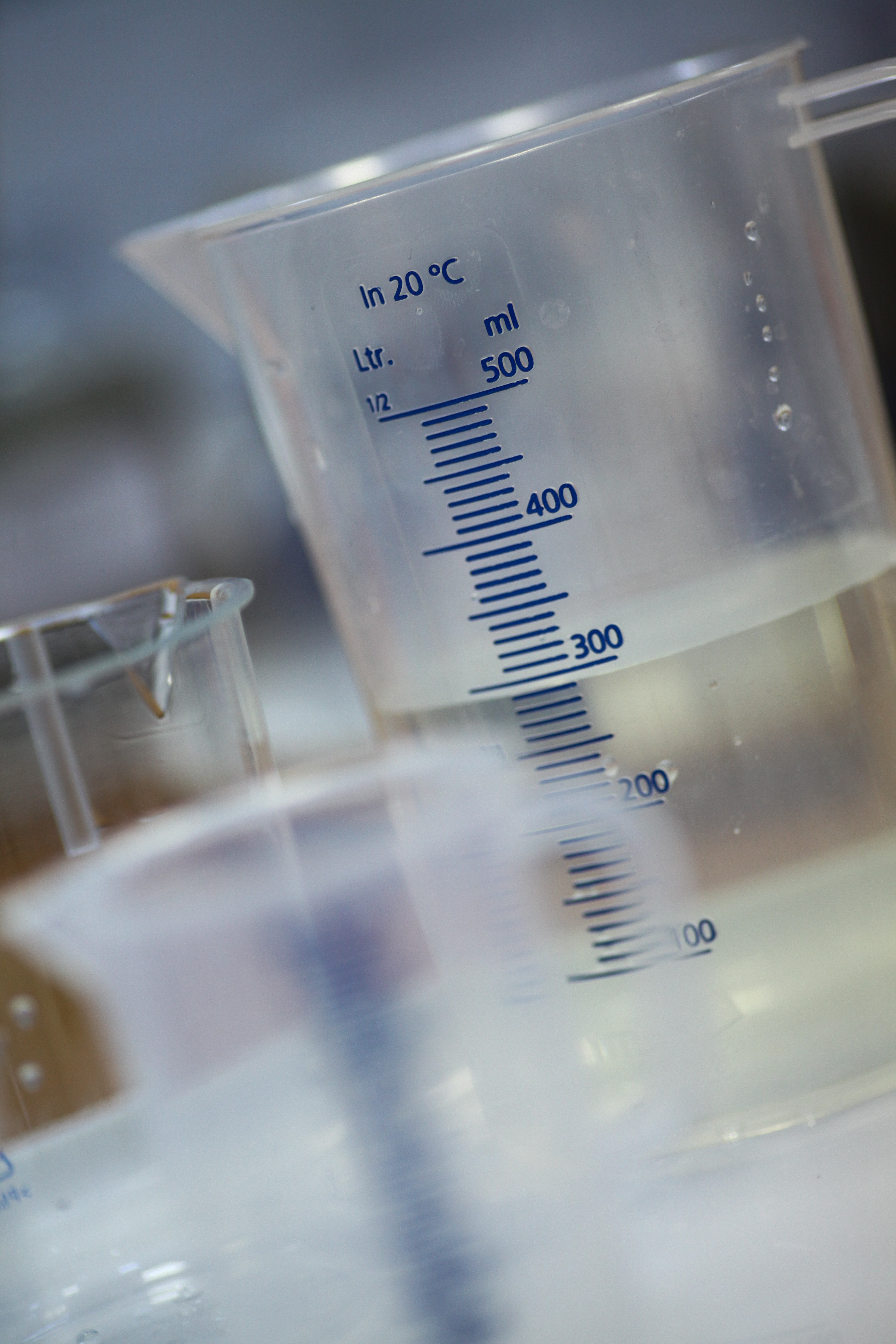
Fix: Use proportioning systems, metering tips, or at minimum graduated measuring cups. Chemical dispensing systems pay for themselves quickly through reduced waste.
Mistake 2: Not Accounting for Water Temperature
Many concentrates dissolve and mix more readily in warm water. Adding concentrate to cold water can result in incomplete mixing, especially with thicker products.
Fix: Follow the manufacturer's temperature recommendations. When in doubt, warm water (100-120 degrees F) generally produces the best mixing results.
Mistake 3: Adding Water to Concentrate Instead of Concentrate to Water
This is more than a mixing preference — it is a safety issue. Adding water to concentrated acids or alkalis can cause violent exothermic reactions, splattering, or boiling.
Fix: Always add concentrate to water. Fill your container with water first, then add the measured amount of concentrate.
Mistake 4: Ignoring Water Quality
Hard water contains calcium and magnesium ions that can interfere with surfactants and reduce cleaning effectiveness. If your local water hardness is above 150 ppm, you may need to adjust your dilution or use products formulated for hard water.
Fix: Test your water hardness. Many chemical manufacturers (including Sky Blue Chemical) can formulate products that perform well in hard water conditions.
Mistake 5: Mixing Different Products Together
Never combine two different chemical products unless the manufacturer specifically approves the combination. Mixing chemicals can create dangerous reactions, noxious gases, or simply neutralize both products.
Fix: Use each product separately at its recommended dilution. If you need a multi-function cleaner, ask your manufacturer about all-in-one formulations.
Dilution Control Systems: The Professional Approach
For operations using more than a few gallons of diluted product per week, investing in proper dilution control equipment eliminates guesswork and saves money.
Types of Dilution Systems
Venturi proportioners: Water pressure draws concentrate through a metering tip at a fixed ratio. Simple, reliable, and affordable. Ideal for janitorial closets and car wash applications.
Electronic dispensing systems: Programmable units that precisely meter concentrate into water. More expensive but offer adjustable ratios and usage tracking.
Drum proportioning systems: Large-scale systems that pull from 55-gallon drums or totes. Used in manufacturing, fleet wash, and industrial cleaning operations.
Metering tips and orifices: Color-coded tips that control flow rate to deliver a specific dilution. Affordable and easy to swap for different products.
How to Verify Your Dilution Is Correct
Don't trust your system blindly. Regular verification catches drift before it becomes a problem.
Titration Testing
Titration is the gold standard for dilution verification. A chemical test determines the exact concentration of active ingredients in your diluted solution. Many manufacturers provide titration kits specific to their products.
Conductivity Testing
For a quick in-field check, conductivity meters can estimate chemical concentration. Higher concentration means higher conductivity. Once you establish a baseline reading for the correct dilution, you can spot-check throughout the day.
Refractometer Testing
Refractometers measure the refractive index of a solution, which correlates to concentration. Common in metalworking fluid management and some car wash applications.
How Sky Blue Chemical Can Help
At Sky Blue Chemical, we don't just sell products — we help you get the most out of them. Our technical team can recommend the right dilution ratios for your specific application, water conditions, and soil load. We also offer custom-formulated concentrates designed to hit optimal performance at your preferred dilution ratio.
Whether you are running a car wash, managing an industrial facility, or launching your own product line, proper dilution is the foundation of chemical performance and cost control.
Need help dialing in your chemical program? Contact our team or request a quote on products formulated for your specific needs.