Mar 2, 2026
9 min read
pH Is the Single Most Important Number on Your Chemical Product Label
Every cleaning chemical sits somewhere on the pH scale, and that number tells you more about how a product works than almost anything else on the spec sheet. It determines what soils a cleaner can dissolve, which surfaces it's safe for, how it interacts with water chemistry, and what safety precautions your team needs to follow.
Yet pH is one of the most misunderstood concepts among chemical buyers. Many operators and facility managers choose products based on brand, price, or habit without ever considering whether the chemistry actually matches their cleaning challenge. This guide explains what pH means in practical terms and how to use it as a decision-making tool.
The pH Scale: A Quick Refresher
The pH scale runs from 0 to 14 and measures how acidic or alkaline (basic) a solution is. Pure water sits at 7.0, which is neutral. Numbers below 7 are acidic. Numbers above 7 are alkaline.
What most people don't realize is that the pH scale is logarithmic, not linear. That means each whole number represents a tenfold change in acidity or alkalinity. A product with a pH of 12 is ten times more alkaline than one at pH 11, and one hundred times more alkaline than pH 10. This is why small differences in pH can produce dramatically different cleaning results and safety profiles.
pH Ranges in Cleaning Chemistry
pH Range | Classification | Common Products |
|---|---|---|
0-2 | Strongly acidic | Mineral scale removers, bowl cleaners, acid brighteners |
2-5 | Mildly acidic | Bathroom cleaners, lime scale removers, rinse aids |
5-8 | Neutral range | Hand soaps, general surface cleaners, glass cleaners |
8-10 | Mildly alkaline | All-purpose cleaners, light degreasers |
10-12 | Moderately alkaline | Heavy-duty degreasers, floor strippers, oven cleaners |
12-14 | Strongly alkaline | Caustic degreasers, drain openers, industrial CIP cleaners |
Why pH Matters: Matching Chemistry to the Soil
The fundamental rule of cleaning chemistry is simple: acidic cleaners dissolve mineral and inorganic soils, while alkaline cleaners dissolve organic and petroleum-based soils. Everything else is refinement.
Alkaline Cleaners (pH 8-14)
Alkaline chemistry works by saponifying fats and oils, breaking them down into water-soluble compounds that rinse away. The higher the pH, the more aggressive the saponification. This is why alkaline products are the go-to for:
Grease and oil removal — kitchen hoods, automotive parts, industrial equipment
Protein-based soils — food processing residue, blood, biological matter
Carbon and soot — exhaust residue, smoke damage, baked-on organic material
Floor finish stripping — dissolving polymer-based floor coatings
Car wash presoak (alkaline stage) — breaking down road film, bug residue, and organic contamination
The tradeoff with high-alkalinity products is that they become more aggressive toward substrates. Strongly alkaline cleaners (pH 12+) can damage aluminum, zinc, soft metals, certain plastics, and painted or coated surfaces. They also pose greater risks to skin, eyes, and respiratory systems.
Acidic Cleaners (pH 0-6)
Acidic chemistry works by dissolving mineral deposits through acid-base reactions. The acid reacts with the mineral to form a water-soluble salt that rinses away. Acidic products excel at:
Mineral scale and hard water deposits — calcium carbonate, lime scale, water spots
Rust and metal oxide removal — iron staining, corrosion, oxidation
Cement and grout haze — construction residue, efflorescence
Soap scum — the calcium salts formed when soap meets hard water
Car wash presoak (acidic stage) — removing mineral contamination, brake dust, and environmental fallout
Brightening metals — restoring luster to aluminum, stainless steel, and chrome
The tradeoff with acidic products is corrosion risk. Strong acids attack most metals (especially mild steel and iron), damage natural stone like marble and limestone, and can degrade grout and concrete. Worker safety requirements are significant, particularly with hydrochloric, phosphoric, and hydrofluoric acid formulations.
Neutral Cleaners (pH 5-8)
Neutral cleaners rely primarily on surfactants rather than pH extremes to do their cleaning work. Surfactants lower the surface tension of water, allowing it to penetrate and lift soils from surfaces. Neutral products are ideal for:
Daily maintenance cleaning — surfaces that are cleaned frequently and lightly soiled
Sensitive surfaces — natural stone, finished wood, delicate metals, electronics
High-traffic floor care — daily mopping that won't degrade floor finishes
Glass and mirrors — streak-free cleaning without residue
Situations requiring worker safety — schools, healthcare, food service where chemical exposure risks must be minimized
The tradeoff is cleaning power. Neutral cleaners struggle with heavy or embedded soils. They're maintenance cleaners, not restorative cleaners.
pH in Car Wash Chemistry: The Two-Step System
Car wash operators deal with this pH concept every day, whether they realize it or not. The industry standard two-step presoak process is fundamentally a pH strategy:
Step 1: Low-pH (acidic) presoak — Targets mineral contamination. Road salt, brake dust, rail dust, hard water spots, and environmental fallout are all mineral-based soils that require acid chemistry to dissolve. Typical pH range: 1.5 to 4.0.
Step 2: High-pH (alkaline) presoak — Targets organic contamination. Road film, bug residue, tree sap, bird droppings, exhaust soot, and petroleum-based grime require alkaline chemistry. Typical pH range: 10.0 to 13.0.
By hitting the vehicle with both chemistries in sequence, a properly configured two-step system addresses the full spectrum of contamination. Operators who rely on only one presoak step are leaving half the soil chemistry unaddressed.
The order matters too. Most systems apply the acidic presoak first because it's less likely to interfere with the alkaline step that follows. Reversing the order can cause chemical interference and reduced performance.
pH and Substrate Compatibility
Choosing the right pH isn't just about matching the soil — it's also about protecting the surface you're cleaning. Here's a practical compatibility guide:
Surface | Safe pH Range | Avoid |
|---|---|---|
Stainless steel | 4-12 | Strong acids below pH 2 |
Aluminum | 5-9 | Both strong acids and strong alkalis |
Mild steel / iron | 7-12 | Acids (cause corrosion and flash rust) |
Copper / brass | 5-9 | Strong acids and ammonia-based alkalis |
Concrete / masonry | 6-12 | Strong acids dissolve cement binder |
Natural stone (marble, limestone) | 6-10 | Any acid (causes etching and dulling) |
Ceramic tile | 2-12 | Generally chemical resistant |
Vinyl / linoleum flooring | 5-10 | Strong acids or alkalis damage surface |
Automotive clear coat | 4-11 | Extreme pH in either direction |
Glass | 2-12 | Strong alkalis can etch glass over time |
The most common pH-related substrate damage we see at Sky Blue Chemical involves aluminum and alkaline cleaners. Aluminum is amphoteric, meaning it reacts with both strong acids and strong alkalis. Using a pH 13 degreaser on aluminum parts will cause pitting, discoloration, and surface degradation. If you're cleaning aluminum, stay in the neutral to mildly alkaline range (pH 7-9) or use a product specifically formulated with aluminum-safe inhibitors.
pH and Water Quality Interactions
Your local water chemistry affects how pH-dependent products perform. Two variables matter most:
Water hardness — Hard water (high calcium and magnesium content) can buffer and resist pH changes, making both acidic and alkaline cleaners less effective. If your water hardness exceeds 200 ppm, you may need to increase chemical concentration or use products formulated with chelating agents that sequester hardness minerals.
Water pH — Municipal water supplies typically range from pH 6.5 to 8.5. If your water is on the alkaline side (pH 8+), it will slightly dilute the effectiveness of acidic products and enhance alkaline ones. The reverse is true for slightly acidic water.
For car wash operators and industrial facilities, periodic water testing is a worthwhile investment. Knowing your water chemistry helps your chemical supplier recommend products and dilution ratios that account for local conditions.
pH Measurement and Monitoring
If pH matters this much (and it does), you should be measuring it. Here are the practical options:
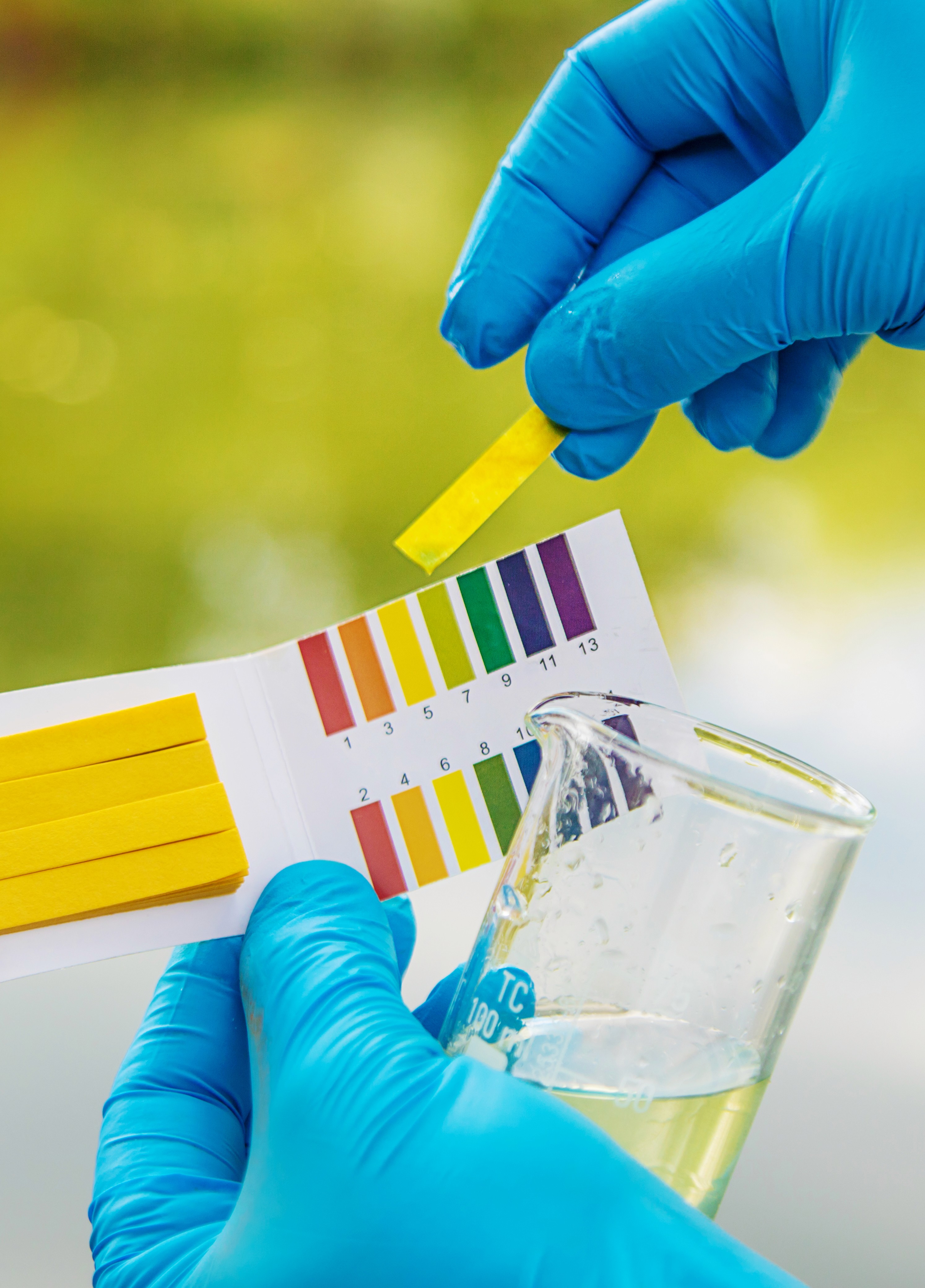
pH test strips — Inexpensive and quick. Dip the strip into your diluted solution and compare the color to the reference chart. Accuracy is typically within 0.5 pH units. Good enough for routine spot-checks.
Digital pH meters — More accurate (within 0.01 pH units) and easier to read. Handheld meters cost between $50 and $300. They require calibration with buffer solutions, but they're worth the investment for operations that depend on precise chemistry.
Titration kits — The most complete testing method, as they measure total alkalinity or acidity rather than just pH. This gives you a better picture of the solution's actual cleaning capacity. Many chemical suppliers provide titration kits specific to their product lines.
When to Test pH
When setting up a new product — Verify that your dilution system is delivering the expected pH
When results change — If cleaning performance drops, pH drift is one of the first things to check
After equipment maintenance — Verify dilution systems are working correctly after any service
Seasonally — Water chemistry can shift with seasonal source changes
When switching suppliers — Confirm the replacement product delivers comparable pH at your dilution ratio
Common pH Misconceptions
"Higher pH always means better cleaning." Not true. A pH 14 product will not clean mineral deposits. It will dissolve grease effectively but may damage surfaces in the process. The right pH depends on the soil type, not the assumption that stronger equals better.
"pH-balanced means pH 7." In marketing, "pH-balanced" usually refers to products matched to a specific application rather than being exactly neutral. A pH-balanced car wash soap might be pH 9 or 10, which is balanced for effective cleaning without damaging clear coat.
"Natural and organic products are always neutral." Many plant-derived chemicals are quite acidic (citric acid, vinegar) or alkaline (sodium bicarbonate, borax). Natural origin doesn't determine pH.
"You can mix an acid and alkali to create a neutral cleaner." While technically true, the acid-base reaction produces a salt and water, neutralizing both the acid's descaling power and the alkali's degreasing power. You end up with an expensive salt solution that doesn't clean anything well.
How Sky Blue Chemical Approaches pH in Formulation
At Sky Blue Chemical, pH is one of the first variables our formulation chemists dial in when developing a new product. We consider the target soil, the surfaces involved, the water conditions at the application site, and the safety requirements of the end users.
Our product line spans the full pH spectrum — from acidic car wash presoaks and mineral scale removers to neutral daily maintenance cleaners to high-alkaline industrial degreasers. And for customers launching their own product lines through our toll blending and private label services, we can formulate to hit any target pH with the performance characteristics your market demands.
Have questions about pH and product selection for your operation? Contact our technical team or request a custom formulation quote.